From acne creams to dietary supplements, foreign visitors are making Korean pharmacies a shopping destination of their own
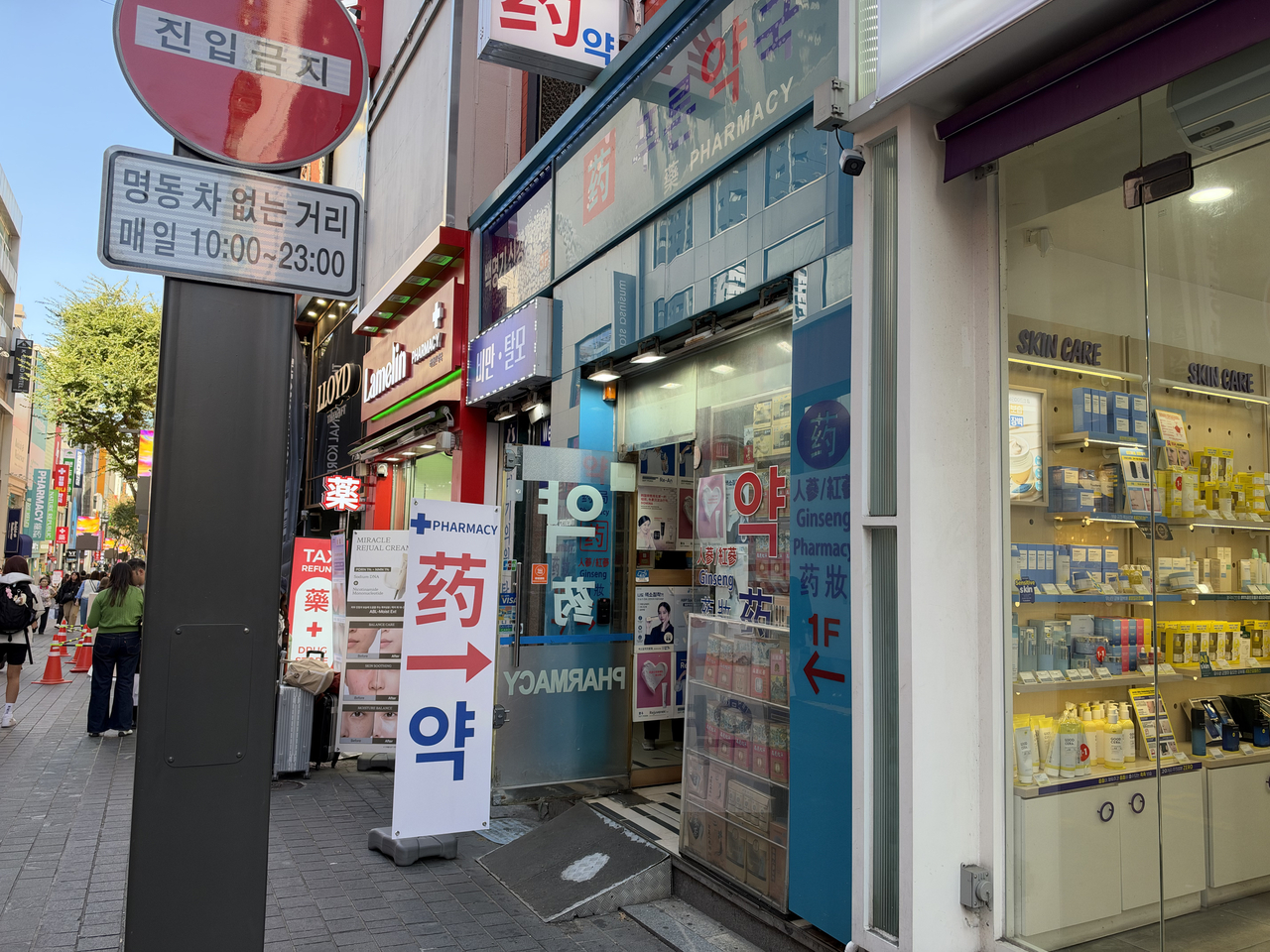
On a chilly October afternoon in Myeong-dong, Seoul’s bustling tourist shopping district, Vietnamese tourist Nguyen Lan was browsing the shelves of a pharmacy for red ginseng, a favorite dietary supplement for many South Koreans.
She used Google Translate to ask the pharmacist how much it cost, what its benefits were and when to take it.
Although Korean red ginseng is readily available in Vietnam, Nguyen said she preferred buying it in a pharmacy here in person because she felt more confident about its authenticity.
"Finding authentic products (in Vietnam) can be difficult because of counterfeit products and mislabeled imports," Nguyen told The Korea Herald.
"Shopping at pharmacies also seems like a chance to find products that meet our needs and bring home a piece of everyday Korean life, since we don’t get to travel to Korea that often," Nguyen noted.
At a nearby pharmacy, groups of Japanese and Chinese tourists scanned the store for skincare products, treatments and ointments to take home.
A Japanese tourist in her 40s, who wished to remain anonymous, said she was looking for ointments to fade dark spots and blemishes on her cheeks.
She showed the pharmacist a shopping list on her phone, written in Korean and ranging from acne treatments and scar ointments to vitamins, cold remedies and pain relief patches. After the pharmacist suggested some similar products, she used a translation app to read the labels and compare them.
While Japan is known for its wide selection of over-the-counter medicines, health products and beauty items at drugstores and discount chains like Don Quijote, she said Korean pharmacies had carved out their own niche by offering specialized skincare products that are harder to find in Japan.
"Pharmacies in Korea offer specialized clinical-grade skincare and high-strength treatments. They are more varied in Korea than in Japan, and some brands are developed by dermatologists and are less expensive than luxury brands," she said.
"Also, I prefer shopping for pharmacy products in person so I can take a closer look and ask a pharmacist for advice."
New destination for foreign shoppers
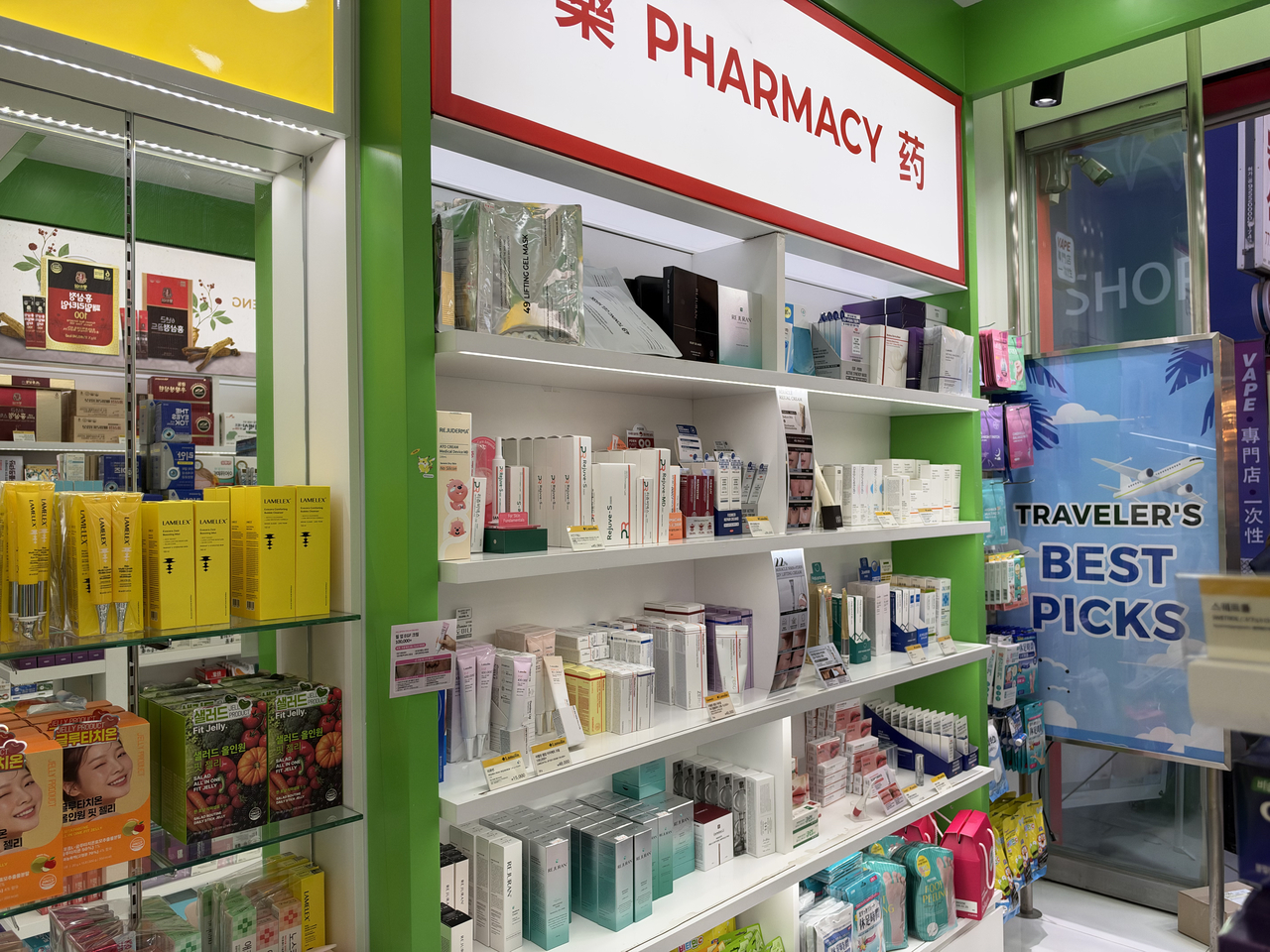
The shoppers’ experiences show how Korea’s beauty appeal extends beyond cosmetics stores to pharmacy shelves.
Beyond beauty retailers such as Olive Young, Chicor and Daiso, foreign shoppers are increasingly turning to pharmacies with a stronger focus on clinical skincare and functional beauty, boasting products tailored to concerns such as acne, dark spots and sensitive skin.
Products popular on social media, including Madeca Cream, Easydew and Rejuvenex PDRN (Poly Deoxy Ribo Nucleotide) creams, are often more readily available at pharmacies than at mainstream beauty retailers.
Posts and videos featuring "must-buy" Korean pharmacy products on TikTok, X, Xiaohongshu, China's leading lifestyle and social commerce platform, and Instagram suggest that visitors arrive knowing which brands to look for. Some users have also created English-language maps of Seoul pharmacies, listing their locations, opening hours and product ranges.
Foreign visitors spent 2.12 trillion won ($1.6 billion) by card in Korea in May, surpassing 2 trillion won for the first time, according to data on foreign tourists’ card spending released by the Korea Tourism Organization in June.
The data showed that pharmacy spending jumped 15,249 percent in Seongsu 2-ga 1-dong and 2,877 percent in Seongsu 2-ga 3-dong, both in Seoul. Spending also surged 12,828 percent in U 1-dong in Busan’s Haeundae-gu, a rise the KTO cited as evidence that the trend was spreading beyond the capital.
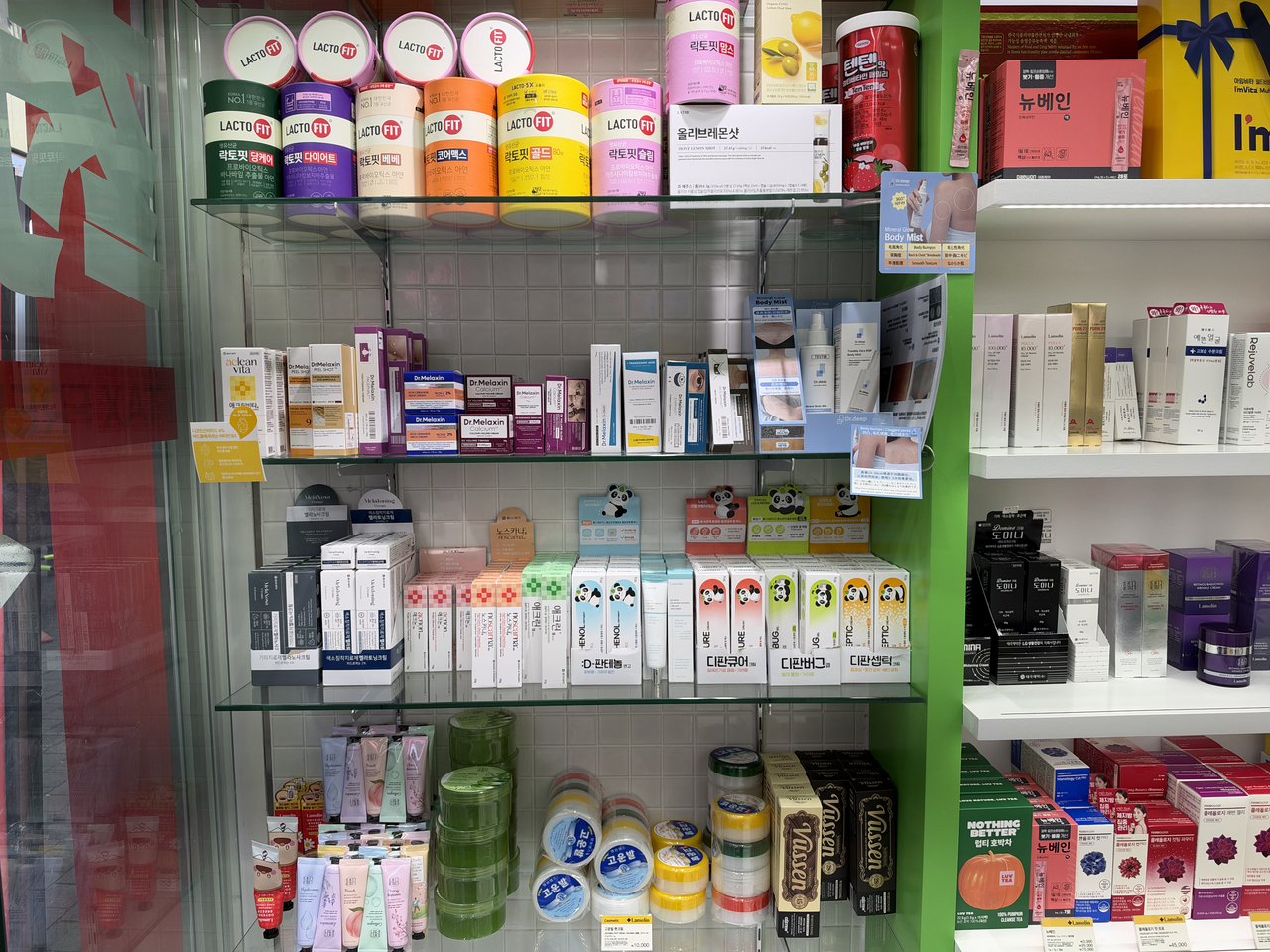
The KTO attributed part of the growth to visitors buying skin-repair creams and other products at pharmacies after cosmetic procedures at dermatology clinics, as quality healthcare, affordable treatments and the popularity of K-beauty draw visitors to Korea for medical care and wellness experiences.
To meet growing demand, Cresoty, a Seoul-based leading healthcare IT solutions company, launched K-Pharm on Oct. 14 in partnership with the KTO, helping foreign tourists find pharmacies, access discount coupons and tax refund services.
Targeting global shoppers
Pharmacies are adapting to foreign demand by displaying popular products near the entrance and offering guides in English, Chinese and Japanese.
Some also have staff dedicated to helping foreign shoppers or separate checkout counters, reflecting a wider shift in tourist shopping, with independent travelers venturing beyond department stores and duty-free shops.
Some pharmacies even resemble beauty boutiques, with neatly arranged displays, multilingual assistance and tax refund services for foreign shoppers.
Beyond language assistance, many Korean pharmacies are expanding their beauty and wellness offerings to include products formulated for specific concerns, including acne, redness, dark spots and skin recovery are also widely popular among tourists from overseas.
Recently, PDRN, an ingredient used in products marketed for skin repair, has become a particular draw, according to pharmacist Oh Ji-eun, who runs a pharmacy in Seoul’s Myeong-dong.
She noted that its popularity grew especially after Korean aesthetic clinics began using it in treatments aimed at improving skin recovery and hydration.
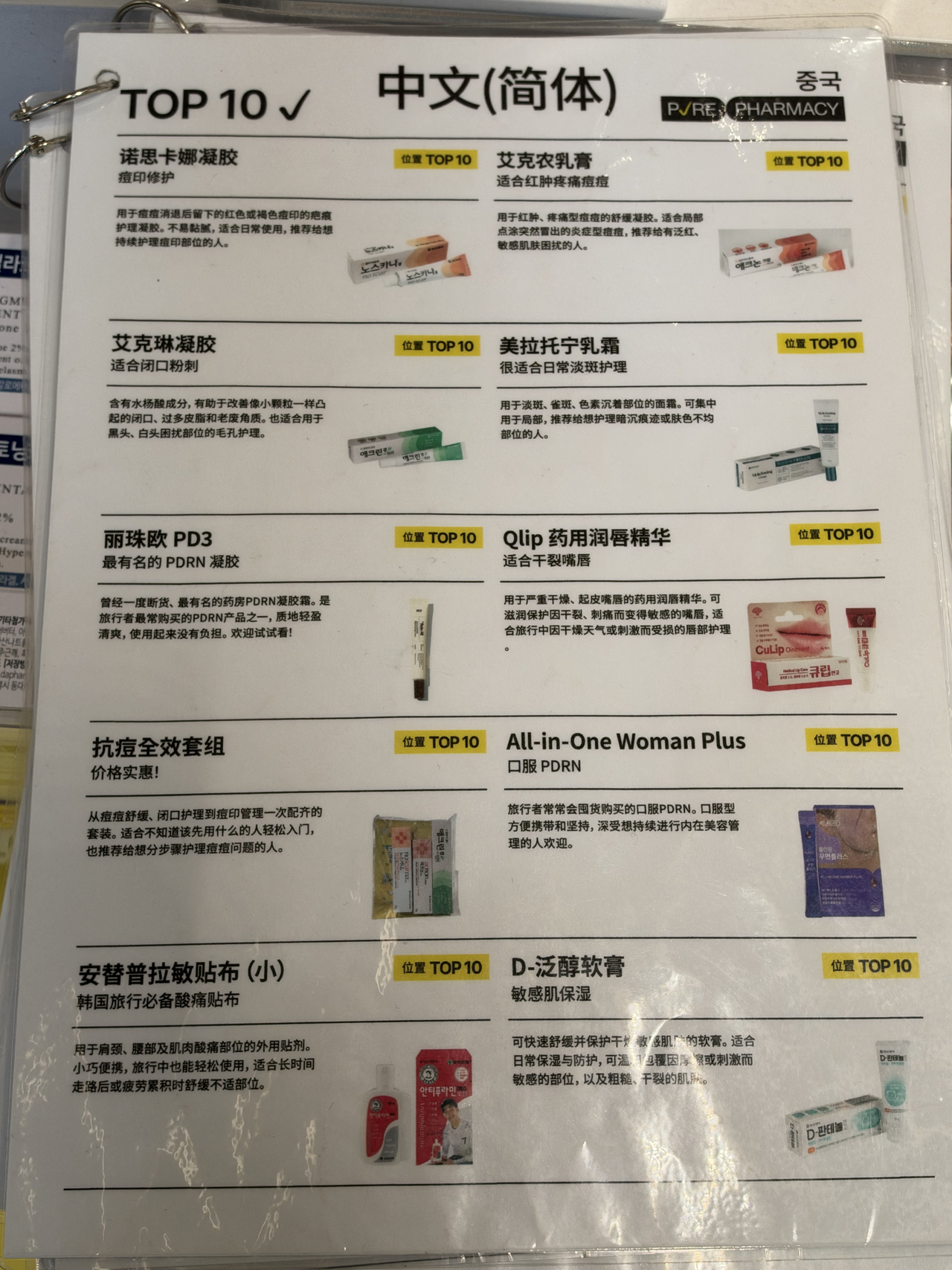
Oh also noted differences in shopping preferences among tourists from different countries
Japanese visitors often look for hydroquinone creams — topical skin-lightening and bleaching agents used to treat hyperpigmentation — for dark spots, glutathione products marketed for skin brightening and antiperspirants. Shoppers from English-speaking and other Western countries tend to be more interested in anti-aging skincare than medicines, the pharmacist said.
The pharmacist added that acne treatments, pharmacy-exclusive skincare products and pimple patches are popular among foreign shoppers of all nationalities. Chinese-speaking customers also buy a broader range of medicines, including pain relief patches.
"Foreign tourists often come in looking for skincare products they have seen on social media and end up buying cold medicines, vitamins and pain relief patches as well. It seems like many are willing to try products simply because they are Korean," Oh said.
junheee@heraldcorp.com